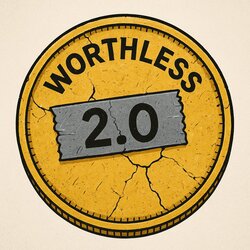
Introduction to Worthless Two (WORTHLESS)
Worthless Two represents a fascinating case study in cryptocurrency community resilience and decentralized governance. Born from the ashes of an abandoned project, this token demonstrates how passionate communities can resurrect and reimagine failed ventures. Unlike its predecessor, Worthless 2.0 emerges as a community-driven initiative that prioritizes transparency, fairness, and collective ownership over traditional tokenomics models.
The Genesis Story: From Abandonment to Revival
The story of Worthless Two begins with disappointment but transforms into a tale of community empowerment. When the original Worthless token was abandoned by its creators, leaving investors and community members without direction, a dedicated group of supporters refused to accept defeat. Rather than allowing the project to fade into obscurity, these community members recognized the potential for something greater.
The revival process involved completely rebuilding the project from the ground up. The community developed a fresh smart contract, eliminating any connections to the previous failed iteration. This clean slate approach allowed for the implementation of improved tokenomics and governance structures that better serve the community's interests.
Core Philosophy and Community Values
Worthless 2.0 operates on fundamental principles that distinguish it from traditional cryptocurrency projects. The token's philosophy centers around true decentralization and community ownership, rejecting the conventional models that often favor early investors or development teams.
The project's commitment to fairness is evident in its distribution model. By eliminating presales and team allocations, Worthless Two ensures that no single entity or group holds disproportionate power over the token's future. This approach creates a level playing field where all participants have equal opportunities to contribute to and benefit from the project's success.
Tokenomics and Distribution Model
The tokenomics of Worthless Two reflect its community-first approach and commitment to fair distribution. Key features of the token's economic model include:
- No Presales: All tokens are distributed fairly without early access privileges for select investors
- Zero Team Allocation: No tokens are reserved for developers or founding team members
- Community Ownership: Token holders collectively control the project's direction and decisions
- Transparent Distribution: All allocation mechanisms are publicly visible and verifiable on the blockchain
This structure ensures that the token's value and governance remain truly decentralized, with no central authority capable of manipulating supply or making unilateral decisions that could negatively impact holders.
Governance and Community Empowerment
Worthless Two implements a robust governance system that empowers token holders to participate in key decisions affecting the project's future. The governance model operates on the principle of collective action, where community members can propose, discuss, and vote on important matters.
Token holders have the authority to influence various aspects of the project, including future development priorities, partnership decisions, and strategic direction changes. This democratic approach ensures that the community's voice remains central to all major decisions, maintaining the project's commitment to decentralization.
Technical Infrastructure and Security
The technical foundation of Worthless Two was built with lessons learned from the original token's shortcomings. The development team prioritized security, transparency, and functionality in creating the new smart contract architecture.
The fresh contract eliminates vulnerabilities and design flaws that may have contributed to the original project's failure. Enhanced security measures protect against common attack vectors, while improved code structure ensures better performance and reliability for all users.
Community Engagement and Culture
One of Worthless Two's defining characteristics is its emphasis on creating an engaging and inclusive community culture. The project recognizes that successful cryptocurrencies require more than just technical innovation – they need active, passionate communities that drive adoption and usage.
The community fostered around Worthless 2.0 emphasizes fun and engagement while maintaining focus on serious goals of financial empowerment and decentralization. This balance creates an environment where participants can enjoy their involvement while working toward meaningful objectives.
Transparency and Accountability Measures
Learning from the failures of the original project, Worthless Two implements comprehensive transparency measures to build and maintain community trust. These measures include:
- Open Source Development: All code and development processes are publicly accessible
- Regular Community Updates: Consistent communication about project progress and challenges
- Public Decision Making: All major decisions are made through transparent community processes
- Verifiable Metrics: Key project statistics and performance indicators are publicly available
Risk Considerations and Challenges
While Worthless Two represents an innovative approach to community-driven cryptocurrency development, potential participants should consider various risk factors. The project's experimental nature means that outcomes remain uncertain, and the cryptocurrency market's volatility affects all digital assets.
The community-driven model, while offering numerous advantages, also presents unique challenges. Coordinating decision-making among large groups of stakeholders can be complex and time-consuming. Additionally, the project's success depends heavily on sustained community engagement and participation.
Future Outlook and Development Roadmap
The future of Worthless Two depends largely on community involvement and market conditions. The project's decentralized nature means that development priorities and strategic directions will emerge from community consensus rather than centralized planning.
Potential areas for future development may include enhanced governance mechanisms, expanded utility features, and strategic partnerships that align with the community's values. However, all such developments will require community approval and participation to succeed.
The success of Worthless 2.0 will ultimately be measured by its ability to maintain active community engagement while delivering value to token holders through its unique approach to cryptocurrency governance and distribution.
WORTHLESS tokens can be traded on centralized crypto exchanges. The most popular options include:

Where can you buy Worthless Two?